

BLOGS
GLP-1 Peptides for Weight Loss
Oct
Navigating metabolic health research requires high-purity, laboratory-grade reagents for accurate data collection. At PEPTIDES GREY MARKET, we offer premier research compounds engineered to facilitate advanced study into metabolic regulation, appetite pathways, and cellular signal transduction. Investigators seeking the best GLP-1 for weight loss can evaluate our catalog of highly characterized incretin mimetics, including single, dual, and triple receptor agonists. Every batch is rigorously verified via independent laboratory analysis to guarantee concentration, identity, and baseline purity. Whether your protocols involve examining GLP-1 receptor affinity, tracking cellular glucose uptake, or analyzing fat tissue oxidation mechanisms, our products deliver consistent and reproducible experimental results. Visit our official online store to examine comprehensive product documentation, view full analytical reports, and acquire reliable biochemical reagents for your laboratory trials. Explore our verified scientific supply today to support your ongoing research initiatives.
GLP-1 Peptides for Weight Loss: Comparative Analysis, Dosage Protocols, and Plateau Solutions
The landscape of metabolic research and therapeutic weight management has experienced a dramatic transformation in recent years. Central to this scientific revolution are glucagon-like peptide-1 (GLP-1) receptor agonists and multi-target incretin mimetics. Originally developed for glycemic control in type 2 diabetes, these compounds have emerged as powerful tools for studying body composition, appetite suppression, and metabolic energy expenditure.
For researchers, clinicians, biohackers, and fitness enthusiasts, understanding the differences between available compounds is vital. Determining the best GLP-1 for weight loss requires evaluating biochemical mechanisms, clinical trial data, titration schedules, and methods to overcome biological adaptation. This article provides an evidence-based overview of GLP-1 peptides, comparing key molecules, detailing dosage guidelines, and offering actionable protocols for handling plateaus.
1. Understanding Incretin Hormones and GLP-1 Action
Incretin hormones are gut-derived peptides released in response to nutrient ingestion. They modulate glucose homeostasis and satiety through complex neuroendocrine signaling pathways. The primary endogenous incretins are glucagon-like peptide-1 (GLP-1) and glucose-dependent insulinotropic polypeptide (GIP).
When GLP-1 binds to its receptors in the brain, pancreas, and gastrointestinal tract, it initiates several physiological actions:
- Delayed Gastric Emptying: Slows stomach evacuation, prolonging postprandial fullness.
- Central Satiety Signaling: Activates POMC/CART neurons in the hypothalamus to reduce appetite and food cravings.
- Glucose-Dependent Insulin Secretion: Promotes insulin release only when blood glucose levels are elevated, minimizing hypoglycemia risk.
- Glucagon Suppression: Inhibits excess hepatic glucose production.
Because natural GLP-1 degrades within minutes via the dipeptidyl peptidase-4 (DPP-4) enzyme, synthetic GLP-1 peptides are molecularly modified with extended half-lives, allowing for convenient once-weekly administration.
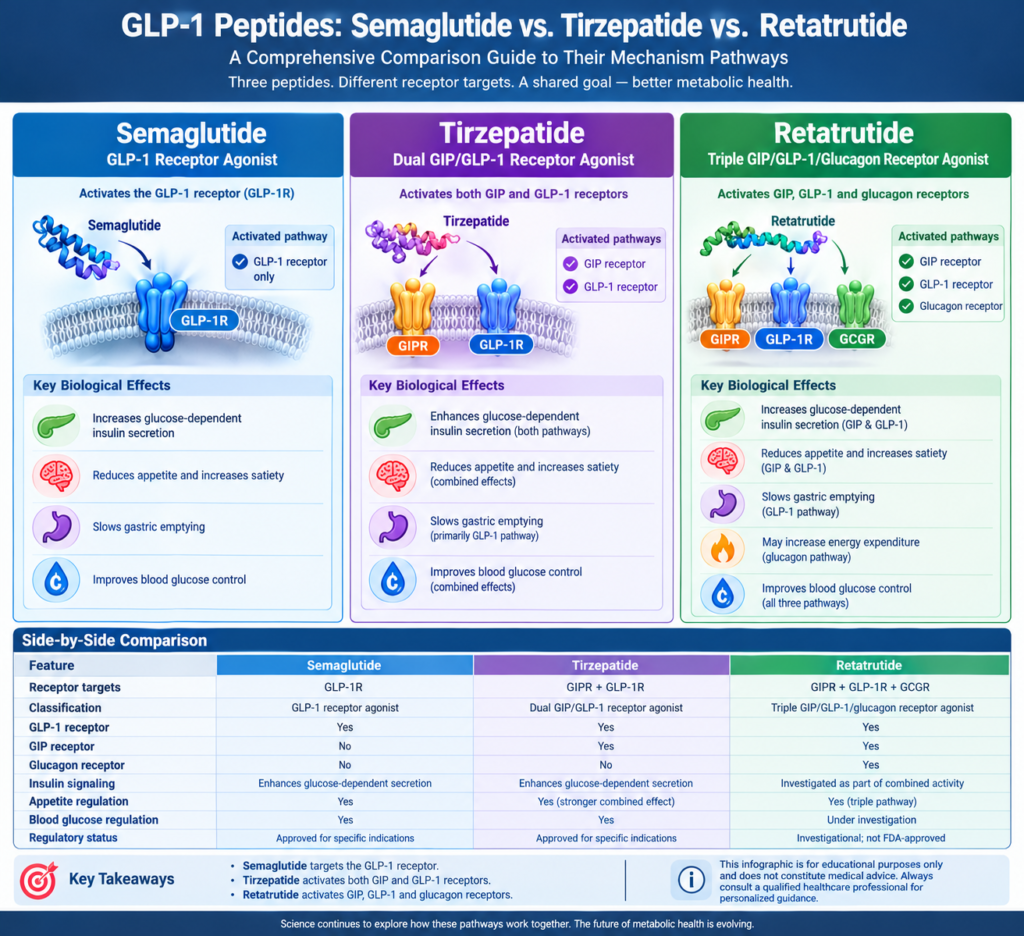
2. Comparing Top Weight Loss Peptides: Semaglutide, Tirzepatide, and Retatrutide
Selecting the best GLP-1 for weight loss depends on specific research goals, individual tolerability, and desired weight reduction magnitude. The field has progressed from single-receptor agonists to dual and triple-receptor agonists.
+-----------------------------------------------------------------------------------------+
|                               INCRETIN PEPTIDE EVOLUTION                               |
+--------------------------+------------------------------+-------------------------------+
| First Generation         | Second Generation            | Next Generation               |
| Single Agonist           | Dual Agonist                 | Triple Agonist                |
| (GLP-1)                  | (GLP-1 / GIP)                | (GLP-1 / GIP / Glucagon)      |
| Example: Semaglutide     | Example: Tirzepatide         | Example: Retatrutide          |
+--------------------------+------------------------------+-------------------------------+
Semaglutide (Selective GLP-1 Receptor Agonist)
Semaglutide represents the modern baseline for GLP-1 therapy. By selectively targeting the GLP-1 receptor, it reduces appetite and significantly alters eating behavior. In large clinical trials (such as the STEP trial series), participants achieved an average total body weight loss of approximately 15% over 68 weeks.
Tirzepatide vs Semaglutide for Weight Loss
When examining tirzepatide vs semaglutide for weight loss, the primary difference lies in receptor targeting. Tirzepatide is a dual agonist that activates both GLP-1 and GIP receptors.
GIP works synergistically with GLP-1 to enhance insulin secretion and optimize lipid metabolism in adipose tissue. Clinical evidence from the SURMOUNT-1 trial demonstrated that participants receiving the maximum weekly dose of tirzepatide (15 mg) achieved up to a 22.5% average body weight loss. This superior efficacy makes tirzepatide a highly attractive option when standard GLP-1 agonists reach a ceiling effect.
Retatrutide Weight Loss Results
Retatrutide represents the frontier of multi-agonist peptide research. Known as a “tri-agonist,” retatrutide targets three distinct metabolic receptors: GLP-1, GIP, and the glucagon receptor (GCGR).
The addition of glucagon receptor activation increases basal metabolic rate and energy expenditure while promoting fat breakdown in the liver. Recent clinical trial data published in The New England Journal of Medicine demonstrated extraordinary retatrutide weight loss results, with participants losing an average of up to 24.2% to 28% of their total body weight at 48 to 80 weeks on maximum weekly dosages (12 mg).
| Compound | Target Receptors | Average Clinical Weight Loss | Primary Distinction |
| Semaglutide | GLP-1 | ~15% | Standard single-agonist peptide |
| Tirzepatide | GLP-1 + GIP | ~20% – 22.5% | Dual action, higher fat loss synergy |
| Retatrutide | GLP-1 + GIP + Glucagon | Up to ~24% – 28% | Triple action, elevates energy expenditure |
3. Comprehensive GLP-1 Dosage Guide for Weight Loss
Establishing a safe and effective titration schedule is critical for minimizing gastrointestinal side effects such as nausea, vomiting, and diarrhea. Below is a representative GLP-1 dosage guide for weight loss comparing standard clinical titration protocols for semaglutide and tirzepatide.
Semaglutide Titration Protocol
- Weeks 1–4: 0.25 mg once weekly (Initiation phase to assess tolerance)
- Weeks 5–8: 0.5 mg once weekly
- Weeks 9–12: 1.0 mg once weekly
- Weeks 13–16: 1.7 mg once weekly
- Week 17 and beyond: 2.4 mg once weekly (Maintenance dose)
Tirzepatide Titration Protocol
- Weeks 1–4: 2.5 mg once weekly
- Weeks 5–8: 5.0 mg once weekly
- Weeks 9–12: 7.5 mg once weekly (Optional stepping dose)
- Weeks 13–16: 10.0 mg once weekly
- Weeks 17–20: 12.5 mg once weekly
- Week 21 and beyond: 15.0 mg once weekly (Maximum maintenance dose)
Note: Researchers and medical supervisors should only step up doses if the subject tolerates the current level without severe side effects.
4. Overcoming the Semaglutide Weight Loss Plateau
A common challenge in long-term metabolic management is the biological slowdown in weight reduction. Experiencing a semaglutide weight loss plateau is a normal adaptive response as the body attempts to maintain homeostatic set points.
Why Do Weight Loss Plateaus Occur?
Plateaus occur due to physiological mechanisms including:
- Metabolic Adaptation: As total body mass decreases, basal metabolic rate naturally declines.
- Adaptive Thermogenesis: The body conserves energy by decreasing spontaneous physical movement (NEAT).
- Receptor Desensitization: Continuous exposure to an agonist can downregulate receptor sensitivity over extended periods.
Actionable Strategies to Break a Plateau
When weight loss stalls on a single GLP-1 agonist, researchers and clinicians utilize several evidence-based protocols:
- Transition to Dual or Triple Agonists: Switching from semaglutide to tirzepatide or retatrutide introduces new signaling pathways (GIP and glucagon) that re-stimulate lipolysis and energy expenditure.
- Adjust Dietary Protein and Resistance Training: To preserve lean muscle tissue and maintain baseline metabolic rate, subjects should consume adequate dietary protein (1.6–2.2g per kg of body weight) and engage in progressive resistance exercise.
- Incorporate Strategic Refeed Phases: Temporary, controlled increases in carbohydrate intake can assist in modulating leptin levels and thyroid hormone activity.
- Evaluate Dose Escalation: Confirm whether the subject has reached the maximum tolerated dosage prior to declaring a true plateau.

5. Quality Assurance and Sourcing High-Purity Peptides
When conducting laboratory trials or evaluating peptide literature, compound purity is paramount. Impurities, heavy metals, or incorrect sequences can distort experimental data and alter biological activity.
High-performance liquid chromatography (HPLC) and mass spectrometry (MS) reports verify that a compound meets exact purity thresholds. To review verified testing documentation on our research products, check our Certificate of Analysis page.
For additional information on our operations, order fulfillment, and privacy standards, please visit our About Us page, browse our full inventory in the Shop, or review our Shipping Policy, Payment and Refund Policy, and Privacy Policy.
Conclusion
Determining the best GLP-1 for weight loss depends on evaluating individual metabolic profiles, clinical goals, and target receptor pathways. While semaglutide remains a gold-standard single agonist, multi-receptor peptides like tirzepatide and retatrutide demonstrate superior potency and higher total fat reduction in clinical trials. By adhering to structured titration schedules and implementing proactive plateau management strategies, researchers can maximize efficacy while maintaining safety standards.
If you have technical questions regarding our laboratory research reagents, feel free to reach out to our team via our Contact Us page or visit our main Homepage for updates.
